
REVIEW · CAYMAN FISHING CHARTERS & WATER SPORTS
Introductory Semi-Private Kitesurf Lesson
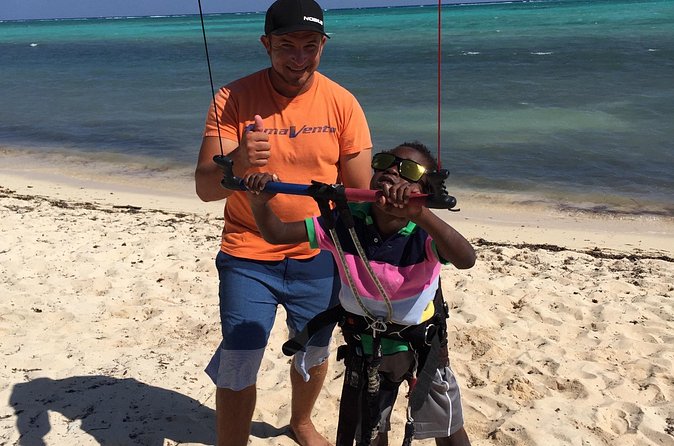
Kitesurfing starts on calm, shallow water. This semi-private intro lesson at Seven Mile Beach is built for first-timers who want real coaching, not just watching from shore. You’ll get taught how to fly the kite, control it, and then move into board work once the basics click.
I love that equipment is included, so you show up and get geared up on site. I also love the hotel pickup and drop-off for selected hotels, because it saves time and keeps your head in the lesson instead of on logistics.
The main tradeoff is sharing: because it’s semiprivate, you’ll split attention and gear time with one other student. Also, the experience needs good weather, so conditions can affect what you get to do that day.
In This Review
- Key things to know before you go
- Seven Mile Beach Wind and Water, Set Up for First-Time Riders
- What Your 2-Hour Semiprivate Lesson Covers, Step by Step
- Gear, Pickup, and the Logistics That Actually Matter
- The Instructor Factor: Why Semi-Private Feels Like Real Coaching
- Kite Control on Land and in the Water, Without the Guesswork
- When the Board Comes Out: Water Starts and Board Runs
- Price and Value: Is $400 per Group Worth It?
- How Fast Can You Progress After One Lesson?
- Who This Lesson Suits Best
- A Few Practical Considerations Before You Book
- Should You Book Kitesurf Cayman’s Intro Semi-Private Lesson?
- FAQ
- Where does the introductory semi-private kitesurf lesson take place?
- How long is the lesson?
- Is the lesson semi-private and how many people are in it?
- Is hotel pickup and drop-off included?
- What equipment is provided?
- How much does the lesson cost?
- What is the cancellation policy?
Key things to know before you go
- Semiprivate format (up to 2 total) keeps instruction tight, with plenty of chances to get corrected in real time.
- Equipment included means you don’t have to hunt for rentals, then hope the setup fits.
- Instructors like Pedro, Louis, Will, Miguel, and Jhon are repeatedly praised for patience and thorough teaching in the water.
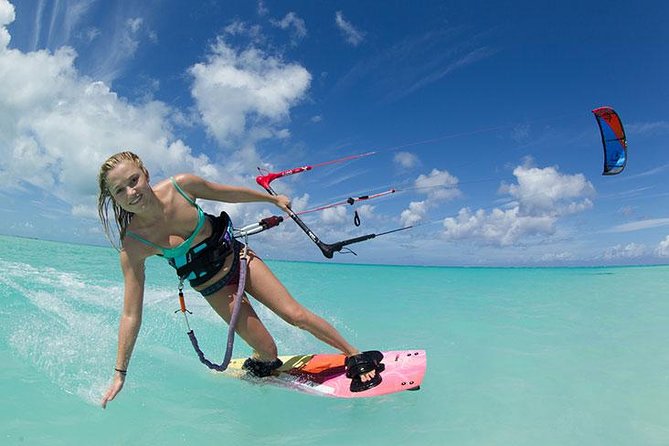
- Shallow, teachable water (knee-deep or waist-deep is described in feedback) makes learning safer and more productive.
- Clear safety communication shows up in reviews, including mention of radios for coordination.
- Progress that can happen fast is a theme, with people describing standing up and even riding more directions after lessons.
Still weighing up the boats? These Grand Cayman trips came out well when we reviewed them.

Seven Mile Beach Wind and Water, Set Up for First-Time Riders
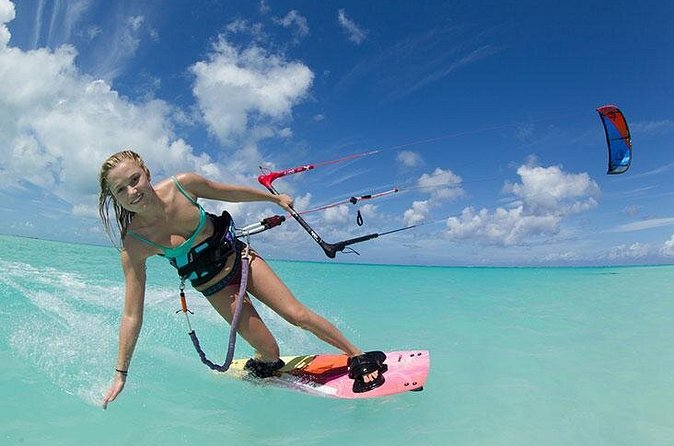
Kitesurfing lessons work best when the water is forgiving and the wind is consistent enough to practice without chaos. At Seven Mile Beach, the setup is aimed at just that. You’re not sent out to figure it all out on your own. Instead, the whole lesson is organized around learning kite control first, then using the board once you can manage the kite reliably.
Another reason this location works for beginners is how focused the teaching zone tends to be. Reviews describe calm, clear, shallow water, with instructors able to walk out with you. That matters. In kitesurfing, your first battles are timing, balance, and kite power, not advanced riding. Shallow water lets you repeat key steps without the scary feeling of being far from help.
What Your 2-Hour Semiprivate Lesson Covers, Step by Step
This is an intro lesson, about 2 hours, with a clear progression. The goal is to get you controlling the kite, then moving into your first real water starts and board runs.
Here’s how the lesson flow typically works, based on the structure described for this course:
First, you’ll learn how to fly the kite and handle it safely. That usually means understanding how the kite responds, how power changes as you move it, and how to keep the kite positioned instead of chasing it. This is the part that makes or breaks everything after.
Next, you’ll focus on kite control until it stops feeling like a mystery. The instructor’s job is to help you build muscle memory so you can steer the kite confidently. In reviews, the instructors are repeatedly described as thorough and patient, with examples like Pedro being very careful and positive, and Will being consistently encouraging.
Once kite skills are in a workable place, the lesson shifts to board work. You’ll start practicing water starts, then progress into board runs. The emphasis is not on tricks. It’s on getting you moving over the water with control, enough to feel the sport instead of only learning theory.
Gear, Pickup, and the Logistics That Actually Matter
You’re paying for a guided experience, not just equipment access. Here, that’s handled for you.
You’ll have all necessary equipment included. That’s a big deal for first-timers because the wrong gear setup can turn day one into a frustration spiral. When everything is provided, the instructor can rig and adjust it based on your level and body size, then keep the lesson moving.
Hotel pickup and drop-off is included for selected hotels only. If your hotel is on the list, it’s a convenient way to get to the kite spot without wasting your energy. If it’s not, you’d need another way to arrive, so check before you assume it’s door-to-door.
You’ll also use a mobile ticket. That’s minor, but it helps. Less paper. Less hassle. Show up, scan, and go.
If you’re a cruise passenger, you’ll need to provide your ship name and docking and re-boarding times. That’s a good sign operationally. It means the team is used to planning around real schedules, not just perfect-world travel.
The Instructor Factor: Why Semi-Private Feels Like Real Coaching
The semiprivate setup here is the whole point. Instead of a crowd, you’re learning alongside just one other person, so your instructor can correct you faster.
That shows up again and again in the feedback, with strong mentions of instructors such as Pedro, Louis, Will, Miguel, and the team leadership including Jhon. The common theme is attention and patience. People describe moving from early confusion to standing and riding during the lesson period, which tells you coaching is being adjusted to the learner, not delivered on autopilot.
Another small but important detail is how the team handles safety and communication. One review specifically mentions radios, which is exactly the kind of behind-the-scenes system that makes instructors able to coordinate while you focus on learning. It’s also a reminder that kiteboarding is technical. A teacher who runs a tight operation helps you stay relaxed.
Kite Control on Land and in the Water, Without the Guesswork
Kiteboarding beginners usually fail in the same pattern: you focus on the kite, then you forget your body position. Or you focus on your stance, and the kite power swings wildly.
This lesson is designed to prevent that. By teaching flying and control first, you get a sequence in your head. Instead of random attempts, you’re practicing specific cause-and-effect: move the kite, feel the pull, respond with your balance, then repeat.
Reviews give examples of instruction that sticks, including one rider describing fast progress after multiple lessons, even reaching upwind and downwind riding. That suggests the instructors aren’t just getting you through the basics. They’re teaching you the decisions behind the basics, like where to position the kite for lift and speed.
And for first-timers, that’s huge. Because once you understand kite control, the rest of kitesurfing becomes more like skill building and less like survival.
When the Board Comes Out: Water Starts and Board Runs
This is the moment most beginners wait for, and it only happens after kite control is in a good place.
When you reach the board stage, you’ll begin practicing first water starts. Think of this as the transition step: you can manage the kite, now you must coordinate stance, board position, and direction while the kite pulls you forward.
After that, you move into board runs. These are shorter rides meant to teach direction and control over distance, not speed records.
What helps here is the kind of water described in feedback: shallow zones like knee-deep or waist-deep areas. That means if something goes wrong, you’re not dealing with an emergency far from help. The instructor can guide you quickly and safely, and you can get back to practice without the lesson stalling.
One review also mentions pristine water and dramatic first spills. That’s normal in kitesurfing. The difference with a good intro lesson is that those moments are used to correct your technique, not just to scare you away.
Price and Value: Is $400 per Group Worth It?
The price is $400 per group (up to 2), for a lesson lasting about 2 hours. If you’re going solo, you’re paying for the group structure. If you’re going with one other person, the cost becomes easier to swallow because the lesson is designed for sharing.
This is where semiprivate becomes value. The tour explicitly says sharing cuts your cost in half by sharing the kite and board. That’s the key financial logic: you still get a full instructor-led progression, but you split the group cost instead of paying for a fully private setup.
You’re also getting pickup (selected hotels) and equipment included. If you’ve ever done water sports where rentals are extra and then gear compatibility turns into a headache, you’ll appreciate that everything is handled.
So is it worth it? For me, it’s worth it when you want structured coaching and real time in the water, not a vague intro. If you want to learn fast and feel safe doing it, semiprivate at this price is a practical sweet spot.
How Fast Can You Progress After One Lesson?
A first lesson won’t turn you into a freestyle rider. This is an intro: kite control, then water starts, then board runs.
But the encouraging part is that progress can happen quickly in the right conditions. One review describes someone standing up and even riding more directions after a short sequence of lessons. Another mentions a father and son type group where kids were kiting on their own within a matter of hours across lessons.
For your expectations, aim for this:
- By the end of the intro, you should understand how the kite is supposed to feel when it’s in the right position.
- You’ll likely get enough board time to experience the sport’s rhythm, even if you still need more practice for consistency.
- If you enjoy it, a second lesson is where you tend to tighten technique, because you’re repeating the same skills with better body timing.
One review specifically recommends a second private lesson for faster improvement once the semiprivate course proves you like the sport. That’s a smart strategy: start semi-private to learn the basics, then go more focused once you know what you want to fix.
Who This Lesson Suits Best
This is a good match if you want:
- An affordable intro compared to fully private instruction
- Hands-on coaching rather than a crowd lesson
- A place where instructors can teach in shallow, calm water
You’ll see wide age ranges reflected in feedback, including a 9-year-old learning, plus an older first-timer in their 60s. Most importantly, the instructor approach sounds adaptable. That means if you’re nervous, you’re not the only one. In the reviews, patience is repeatedly praised.
It’s also a great fit if you’re traveling as a couple, a teen group, or a parent-and-child duo, since semiprivate is designed for one other person. If you don’t have a natural partner for sharing, you might still book, but the cost logic depends on how the group size is managed.
A Few Practical Considerations Before You Book
Two realities matter with kiteboarding lessons:
Weather matters. This experience requires good weather. If it’s canceled due to poor weather, you’ll be offered a different date or a full refund. That’s how you protect your time and energy.
Expect some falling. That sounds obvious, but beginners need to hear it plainly. One review mentions face planting in pristine waters, and that kind of first-day physics is common in kite sports. The goal is to learn with support, in a controlled area.
Finally, selected hotels affects convenience. If your hotel isn’t on the pickup list, you might spend more time getting to the teaching spot. Still doable, just plan for it.
Should You Book Kitesurf Cayman’s Intro Semi-Private Lesson?
If you’re trying kitesurfing for the first time in the Cayman Islands and you want the best shot at standing up and riding sooner, I’d say this is an easy yes. The combination of semiprivate coaching, included gear, and a teaching setup designed for shallow water learning adds up to real value.
Book this if:
- You like structured instruction and want lots of feedback.
- You’re traveling with one other person and want to share the cost.
- You want to learn in a safety-forward environment run by an organized team.
Skip it or consider another option if:
- Your schedule is tight and weather cancellations would be a problem.
- You’re only comfortable with fully private attention and don’t want to share gear time.
If the timing works and the weather cooperates, this is the kind of activity that can turn from bucket-list curiosity into a serious new skill fast.
FAQ
Where does the introductory semi-private kitesurf lesson take place?
It takes place at Seven Mile Beach in the Cayman Islands.
How long is the lesson?
The lesson is about 2 hours.
Is the lesson semi-private and how many people are in it?
Yes. It is a semiprivate lesson, and the group is limited to up to 2 people.
Is hotel pickup and drop-off included?
Hotel pickup and drop-off are included for selected hotels.
What equipment is provided?
All necessary equipment is included.
How much does the lesson cost?
The price is $400.00 per group (up to 2 people).
What is the cancellation policy?
You can cancel for a full refund up to 24 hours in advance of the experience start time. If it’s canceled due to poor weather, you’ll be offered another date or a full refund.
More Cayman Islands Write-Ups
- Grand Cayman Shared Airport Transfer
★ 5.0 · 261 reviews
Fresh off the review pile in Grand Cayman

Cayman Fishing Charters & Water Sports, compared.
 ★ 5.0Grand Cayman Kitesurf Gear RentalFrom $10267 reviews
 ★ 5.0Private Charter Reef fishing, Stingray City, Snorkel, MangrovesFrom $90016 reviews
 ★ 5.0Luxury Private Fishing Charters – FULL DAY CHARTERFrom $3,50013 reviews
 ★ 5.0Half Day Luxury Private Fishing Charters in Cayman IslandsFrom $1,9007 reviews
 ★ 5.0Private Swim Lesson or Triathlon Training on Seven Mile Beach!From $1456 reviews
 ★ 5.0Private Deep Sea Fishing Experience in Grand CaymanFrom $1,5006 reviews
Browse the lists this tour appears in